

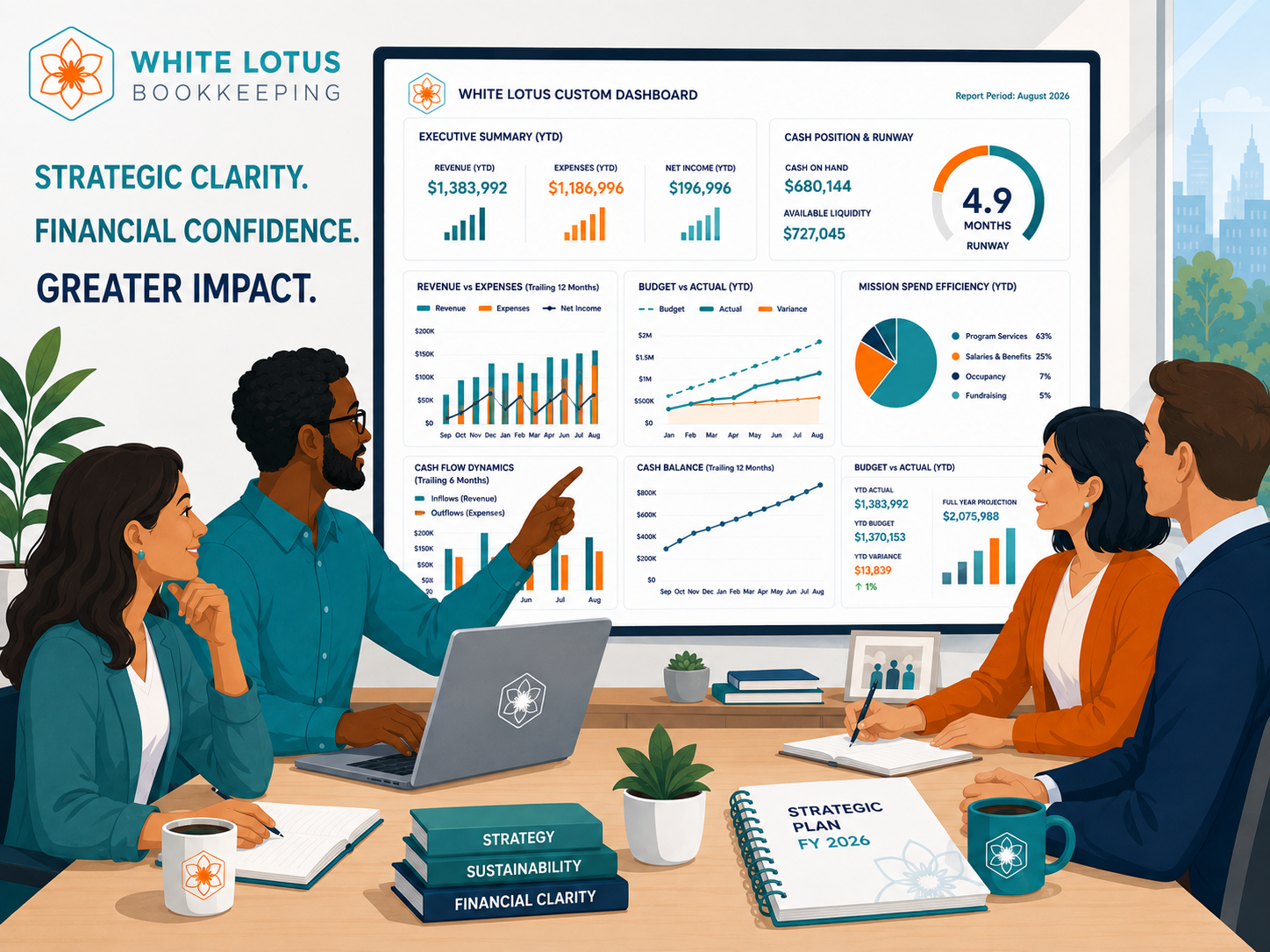
As a nonprofit leader, driving your organization's mission forward is always your highest priority. However, as programs expand, grants double, and team sizes grow, a quiet anxiety often begins to brew in the background: Are our financial systems actually keeping up with our mission?
Many rapidly growing nonprofits find themselves caught in a dangerous friction point. Program impact is soaring, yet financial reporting feels increasingly delayed, fragmented, and stressful. Board meetings become exercises in explaining past discrepancies rather than charting strategic growth, and annual audit seasons loom like an impending crisis. True operational scaling requires a financial foundation built for expansion—not administrative workarounds.
The breakdown in financial clarity rarely happens because of poor intentions; it happens because basic accounting setups were never built to handle the complexity of an expanding organization. When spreadsheets are patched together to track complex restricted funds, human error and operational friction become inevitable.
Without addressing these structural weaknesses, adding more grant funding only compounds operational strain, forcing leadership to spend valuable time putting out administrative fires instead of expanding community impact.
Transitioning from reactive firefighting to strategic financial leadership requires a modern, streamlined accounting foundation. Here is the tactical 3-step framework designed to restore total clarity, utilizing modern tools to eliminate the guesswork.
Stop forcing nonprofit finances into rigid commercial accounting structures or manual spreadsheets. The first step is migrating to a robust cloud accounting system like QuickBooks Online Advanced, customized specifically for fund accounting.
Rather than waiting until the books close to figure out where your money went, implement direct allocation rules. This means setting up automated mapping so that overhead expenses and direct costs are automatically split and assigned to their respective funding streams.
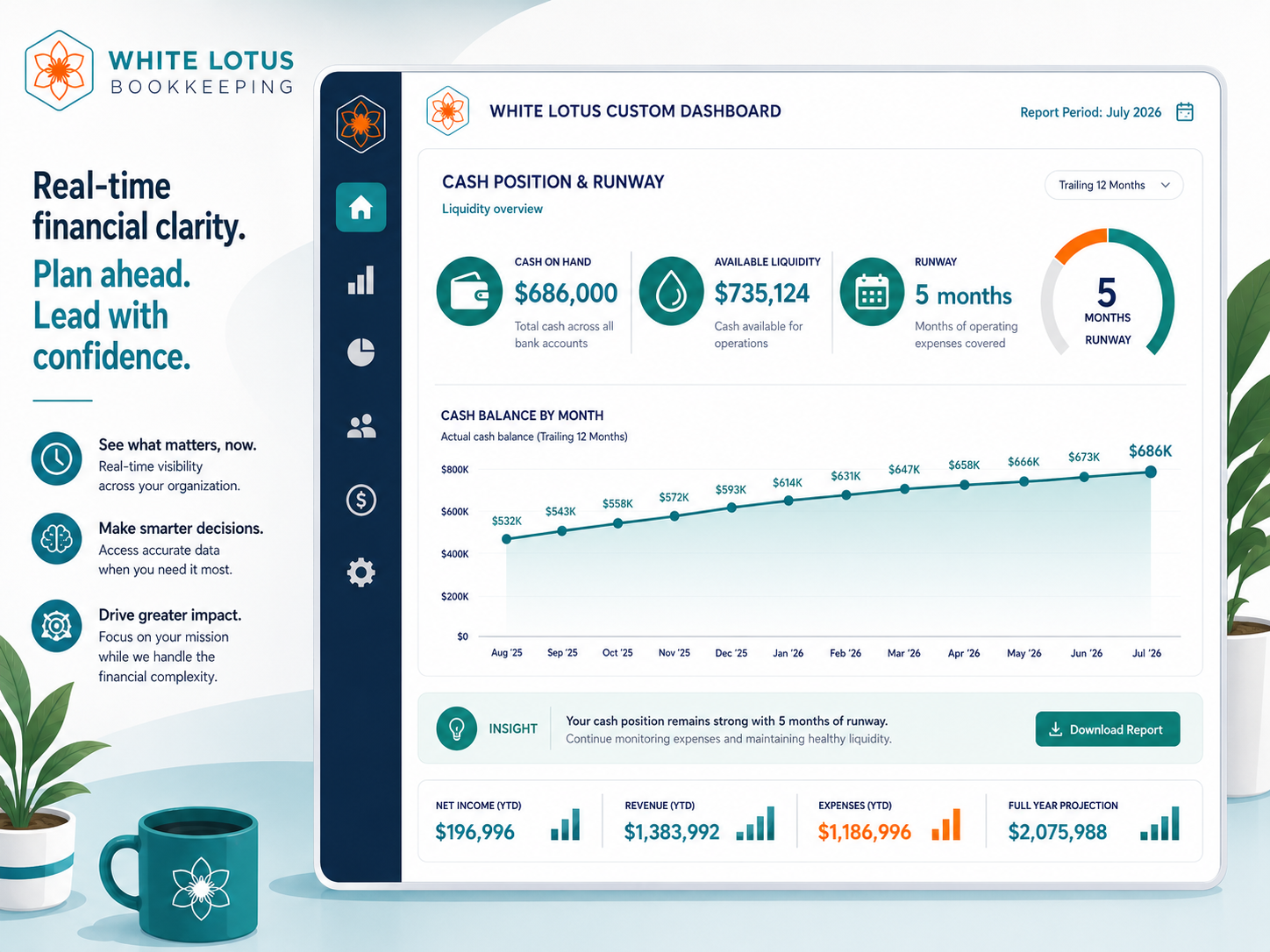
The ultimate key to scaling is moving your data out of dense spreadsheets and into a centralized, highly visual financial dashboard. A proper dashboard transforms raw data into immediate, strategic insights for your board.
Financial clarity is far more than an administrative burden or a tax requirement—it is a vital growth engine for sustainable impact. When your financial architecture is precise, automated, and visually accessible through dynamic dashboards, leadership gains the exact metrics needed to scale operations responsibly. Moving away from fragmented, legacy bookkeeping frees up your time and resources to focus on what matters most: advancing your mission and serving your community.
If your nonprofit is scaling rapidly but your bookkeeping and reporting systems feel like they are stuck in the past, White Lotus Bookkeeping can help.
Stop guessing about your financial health. Empower your board and leadership team with our custom Financial Report Dashboard to get real-time insights into your runway, budget variances, and cash flow dynamics.
.png)


