

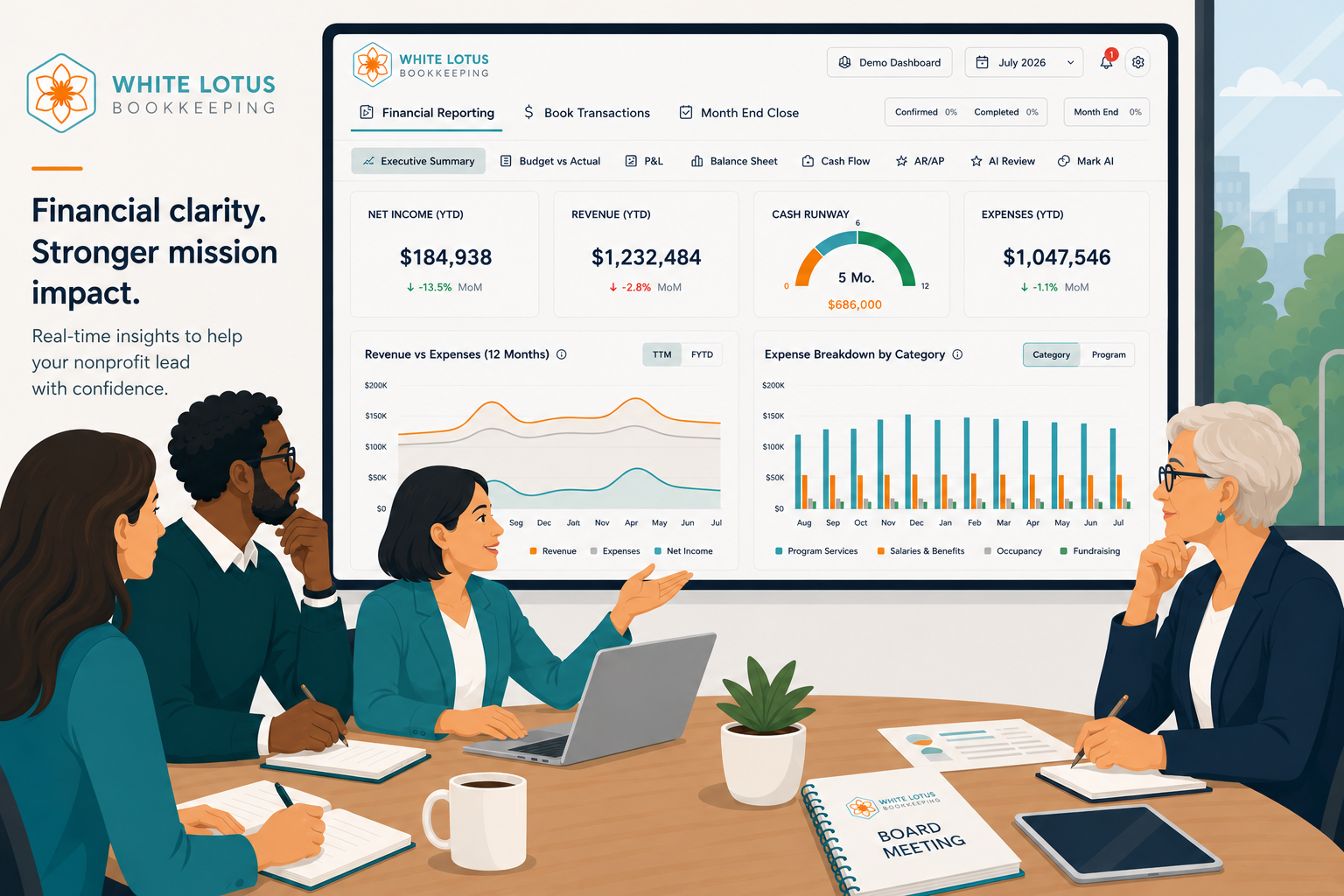
To many executive directors and board members of nonprofits, knowing their organization’s current account balances brings peace of mind. Whether it is $500,000 or millions of dollars, seeing big numbers indicates that all is well with the organization financially.
However, behind that reassuring figure lies a great deal of financial apprehension. Nonprofit executives worry about starting new community programs, paying payroll, and getting stuck in board meetings interpreting complicated reports about the organization’s past performance.
So why does having enough money create false confidence? The reason lies in one aspect of operating a nonprofit called the visibility gap.
Crossing the $1M to $3M revenue threshold is a massive win. It’s also a total headache for your back office. The financial architecture that got you here? It’s going to break. We typically see the cracks form in three distinct places:
Blind spots are dangerous. Without segmented funds and a live view of your cash, leadership is forced to manage the organization retroactively. You're fixing yesterday instead of funding tomorrow.
Let's fix the foundation. You can erase this baseline anxiety by forcing three immediate pivots in how you handle data.
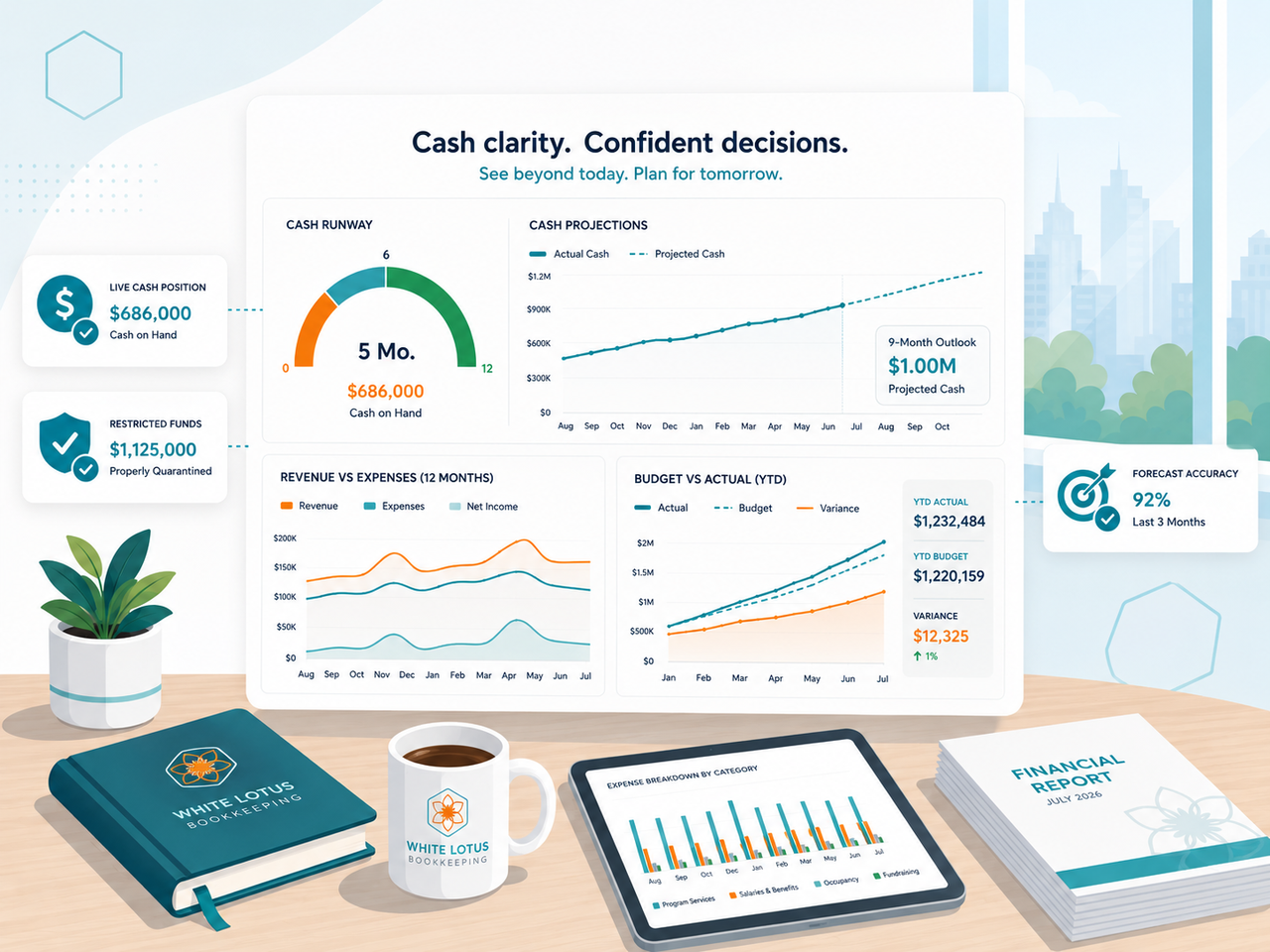
Do this today. Instead of just opening separate bank accounts, force your software to use rigid tracking categories. If you are using platforms like QuickBooks Online, leverage Class Tracking or Location Tracking to tag every dollar of donor-restricted grant money at the transaction level. Clarity begins the exact moment you know your true, unrestricted operating runway.
Month-end P&L statements belong in the past, and so do manual spreadsheets. Centralize your data into a live dashboard that displays high-level KPIs at a glance—specifically your Operating Reserve Ratio and your exact Restricted vs. Unrestricted Cash Balance. When leadership can visually track these numbers on demand, decision-making changes instantly.
Your chart of accounts must mirror your actual growth strategy. Stop letting your board get bogged down in 15 different sub-categories for minor line items like "Office Supplies" or "Postage." Roll those up into a single "Administrative Overhead" bucket so board meetings stay focused on program impact and revenue generation rather than line-item debates over paperclips.
The concept of financial clarity does not revolve around the amount of money deposited in your bank account at a certain time; it is rather about understanding exactly where each dollar is directed and how it helps you achieve your goals. Once nonprofit executives fill in the gap regarding their funds by using the right tools, they will be able to rely on strategic growth rather than the panic associated with spreadsheets.
If your nonprofit is scaling rapidly but your bookkeeping and reporting systems feel like they are stuck in the past, White Lotus Bookkeeping can help.
.png)


